
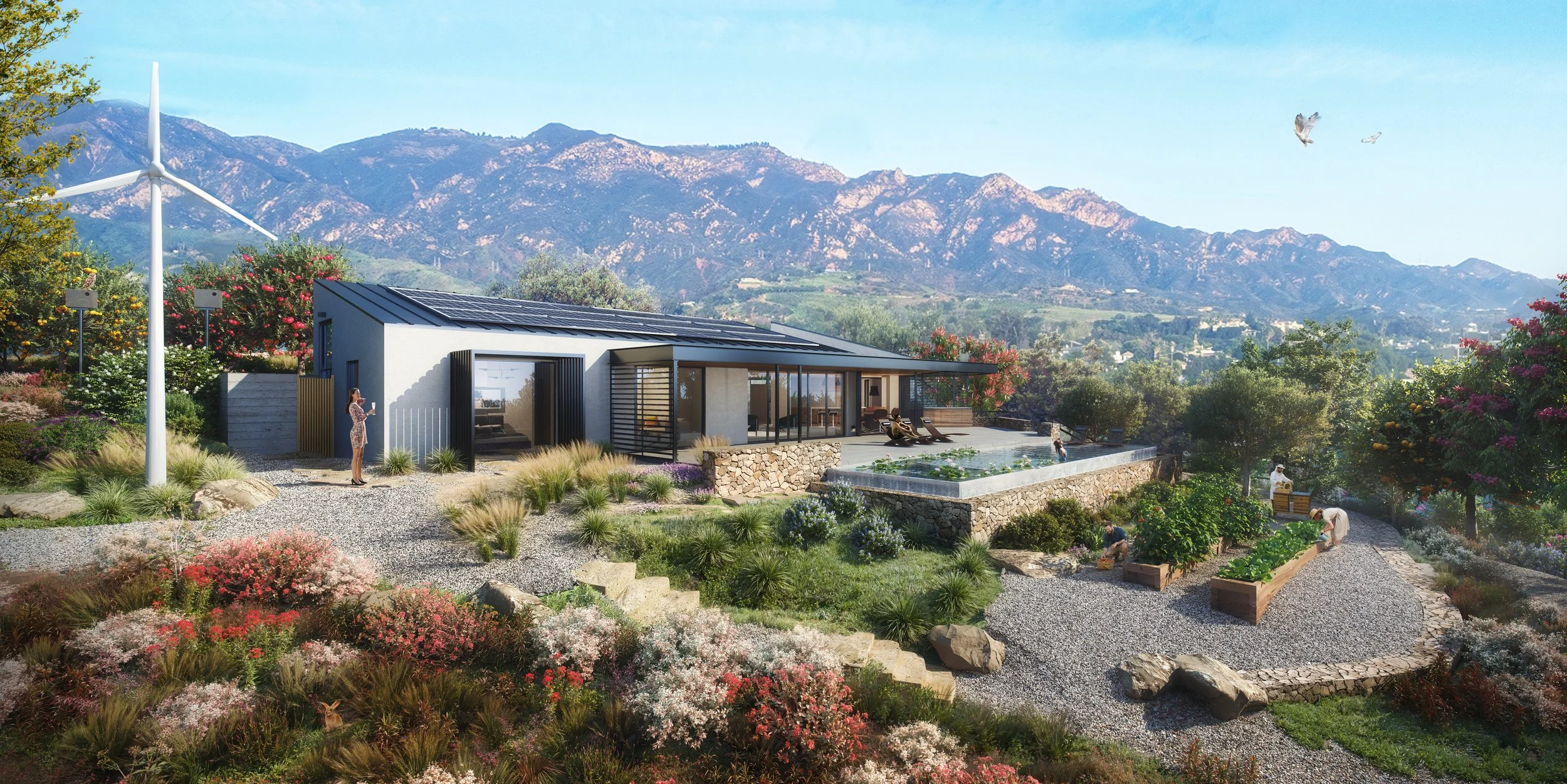
DESIGN FOR WELLBEING
Humans spend about 90 percent of life indoors, which means nearly every breath we take happens inside a building. While the purity of food, water, and outdoor environments often receives close attention, the quality of the indoor spaces where people work, sleep, and recover remains largely overlooked.
Scientific research in environmental health and cognitive science shows that the indoor environment profoundly affects human health, mood, sleep, cognition, and overall wellbeing.
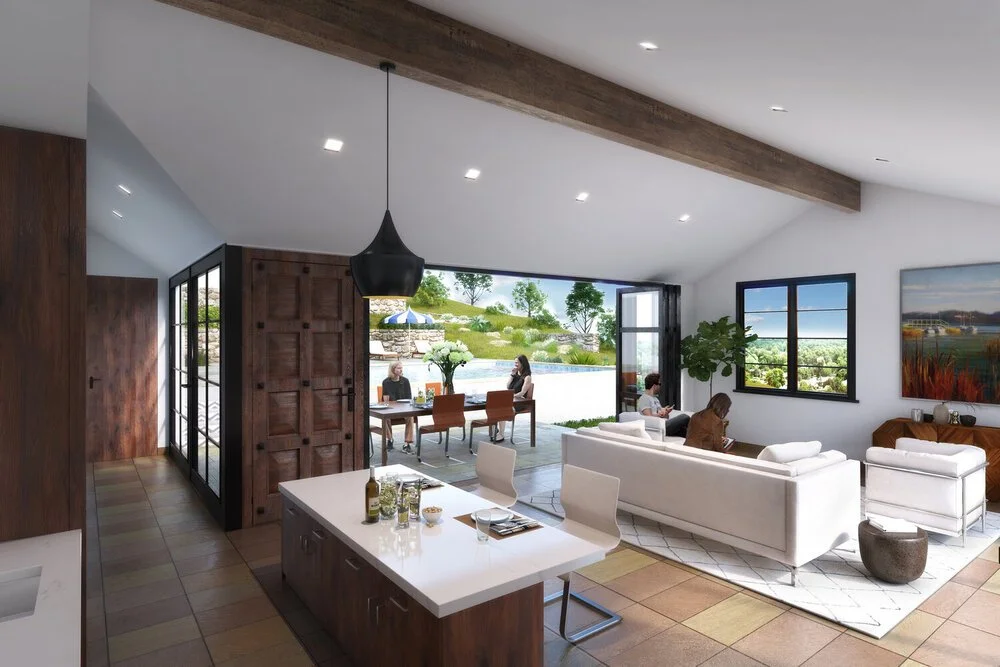
Design for Wellbeing is grounded in this understanding. It treats buildings as biological environments shaped by air, light, sound, temperature, materials, and spatial experience. Its purpose is to create conditions that support physiological resilience, cognitive clarity, emotional stability, and overall human wellbeing.
This approach translates established scientific insights into architectural priorities. It draws from environmental health research, circadian science, acoustic studies, thermal comfort research, and biophilic evidence to define the essential characteristics of environments that enhance rather than compromise human health.
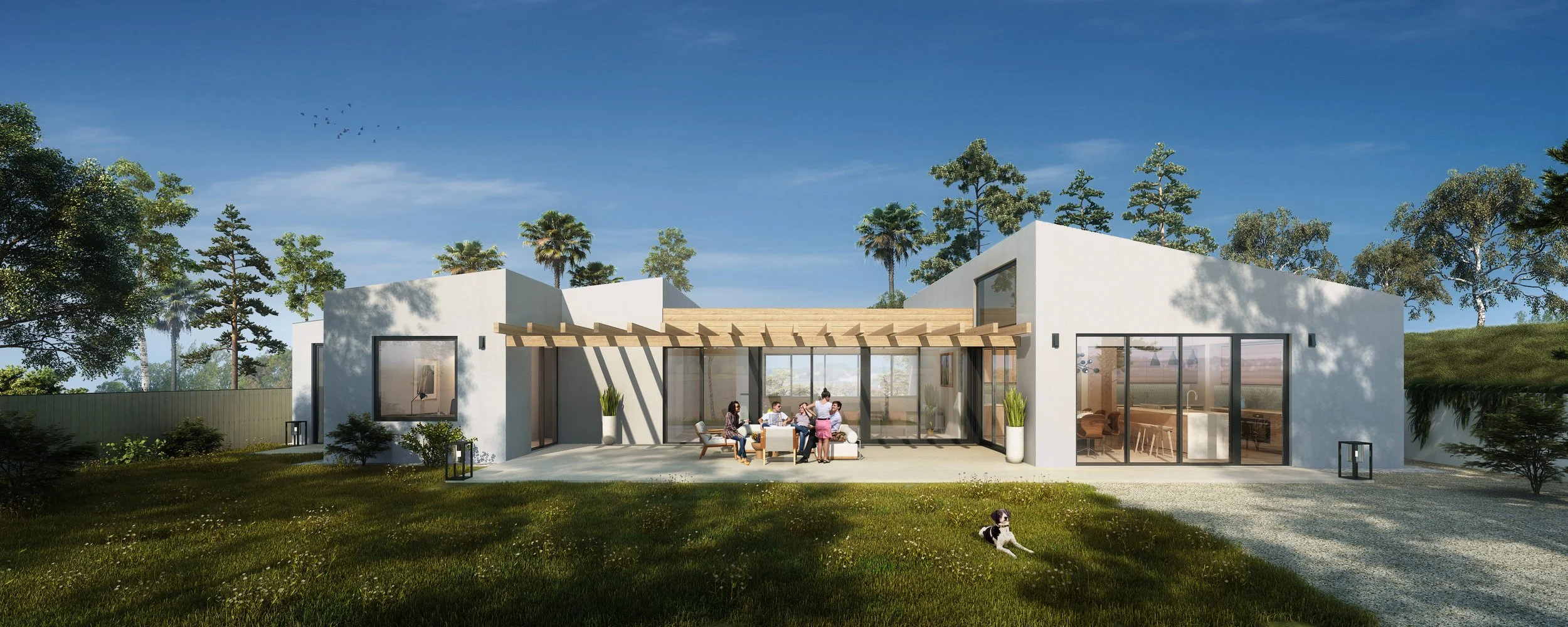
Indoor air quality directly affects cognitive performance, respiratory health, and overall wellbeing. Elevated CO2 levels reduce concentration and decision-making, while particulate matter and volatile organic compounds contribute to respiratory strain. Humidity influences comfort and the transmission of airborne pathogens. Design for Wellbeing incorporates:
Low indoor CO2 concentrations aligned with health benchmarks
Fine particulate control (PM2.5)
Reduced VOC emissions
Filtration and ventilation appropriate to occupancy
Humidity levels that support respiratory comfort
Consistent delivery of fresh, filtered air
The Fuel of the Body
1 – AIR
Water is the body’s primary input, supporting metabolism and overall wellbeing. Water quality influences hydration, mineral balance, and long-term exposure to contaminants. Within a Design for Wellbeing approach, water quality is supported through:
Point-of-entry and point-of-use filtration (carbon, sediment, reverse osmosis)
Post-RO remineralization with calcium and magnesium
Plumbing strategies that limit lead exposure (< 1 ppb)
Reduction of PFAS and elimination of biological contaminants
Mineral balance maintained within healthy ranges (60–120 mg/L)
The Body’s Primary Input
2 – WATER
3 – LIGHT
Light exposure regulates circadian rhythms, which influence sleep quality, alertness, and daily functioning. The timing, intensity, and spectrum of light all play roles in supporting healthy biological patterns. Design for Wellbeing prioritizes:
Daylight access as a primary circadian cue (factor ≥ 2%)
Direct views as a standard, not an amenity
Reduced light levels with warm color temperatures (< 2,700K)
Darkness in sleeping areas maintained at very low nighttime light levels (< 1 lux)
The Regulator of Human Rhythms
4 – ACOUSTICS
Noise exposure affects stress responses, sleep quality, and overall comfort. Quiet, controlled acoustic environments support focus, rest, and social interaction. Design for Wellbeing is expressed through:
Living spaces maintained within comfortable daytime noise ranges (35–45 dBA)
Bedrooms designed to meet WHO night-noise guidance (<30 dBA)
Controlled reverberation calibrated to room use and function
Clear acoustic separation and privacy in sensitive areas
Materials and assemblies that absorb sound rather than amplify it
Quiet Enables Recovery
5 – TEMPERATURE
Temperature and humidity directly influence comfort, sleep, cognitive performance, and cardiovascular strain. Stable thermal environments support daily functioning and recovery. Within a Design for Wellbeing approach, thermal comfort relies on:
Predictable, draft-free temperatures maintained within healthy comfort ranges (drafts < 0.15 m/s)
Sleep-supportive bedroom conditions (60–66°F)
Daytime ranges that support comfort and activity (68–75°F)
Passive strategies and material choices for thermal stability
Quiet, efficient mechanical systems
Stability with Natural Rhythms
6 – MATERIALS
Building materials release chemical compounds that become part of the indoor environment. Low-emission materials reduce exposure to pollutants that can affect respiratory and overall health. Within a Design for Wellbeing approach, material selection prioritizes:
Low-emission, low-toxin materials to meet stringent indoor air quality thresholds (total VOCs < 300 μg/m³)
Healthy adhesives, sealants, and finishes with low formaldehyde content (< 27 ppb)
Moisture-safe assemblies to prevent mold growth
Healthy Chemistry
7 – BIOPHILIA
Exposure to nature supports attention restoration, reduces stress, and improves mood and cognitive function. Visual and spatial connections to natural environments contribute to wellbeing. In a Design for Wellbeing framework, connection to nature is supported by:
Views with depth, distance, and vegetation
Direct access to outdoor environments within 50 ft of primary living areas
Use of natural or nature-derived materials across at least 25% of primary sensory surfaces
Nature Restores the Nervous System
8 – SLEEP
Sleep quality is shaped by environmental conditions, including noise, light, temperature, and air quality. Supportive sleep environments contribute to physical recovery and cognitive function. Design for Wellbeing takes shape through:
Darkness free from intrusive light, maintained below 1 lux
Low nighttime CO2 concentrations (< 700 ppm)
Noise control aligned with sleep science (< 30–40 dBA)
Cool, stable temperatures that support sleep physiology
Layouts that promote a sense of calm, including clear sightlines and reduced visual clutter
The Foundation of Human Regeneration
9 – PSYCHOLOGY
Spatial qualities influence emotional states, attention, and overall comfort. Calm, coherent environments support psychological wellbeing. Within a Design for Wellbeing approach, environmental psychology is shaped through:
Spaces for quiet, reflection, and restoration
Calming proportions and coherent spatial organization
Light qualities that support comfort throughout the day
At least one intentionally designed moment of awe
Use of three or more harmonic proportions to support perceptual coherence
Emotional & Spiritual Ecology
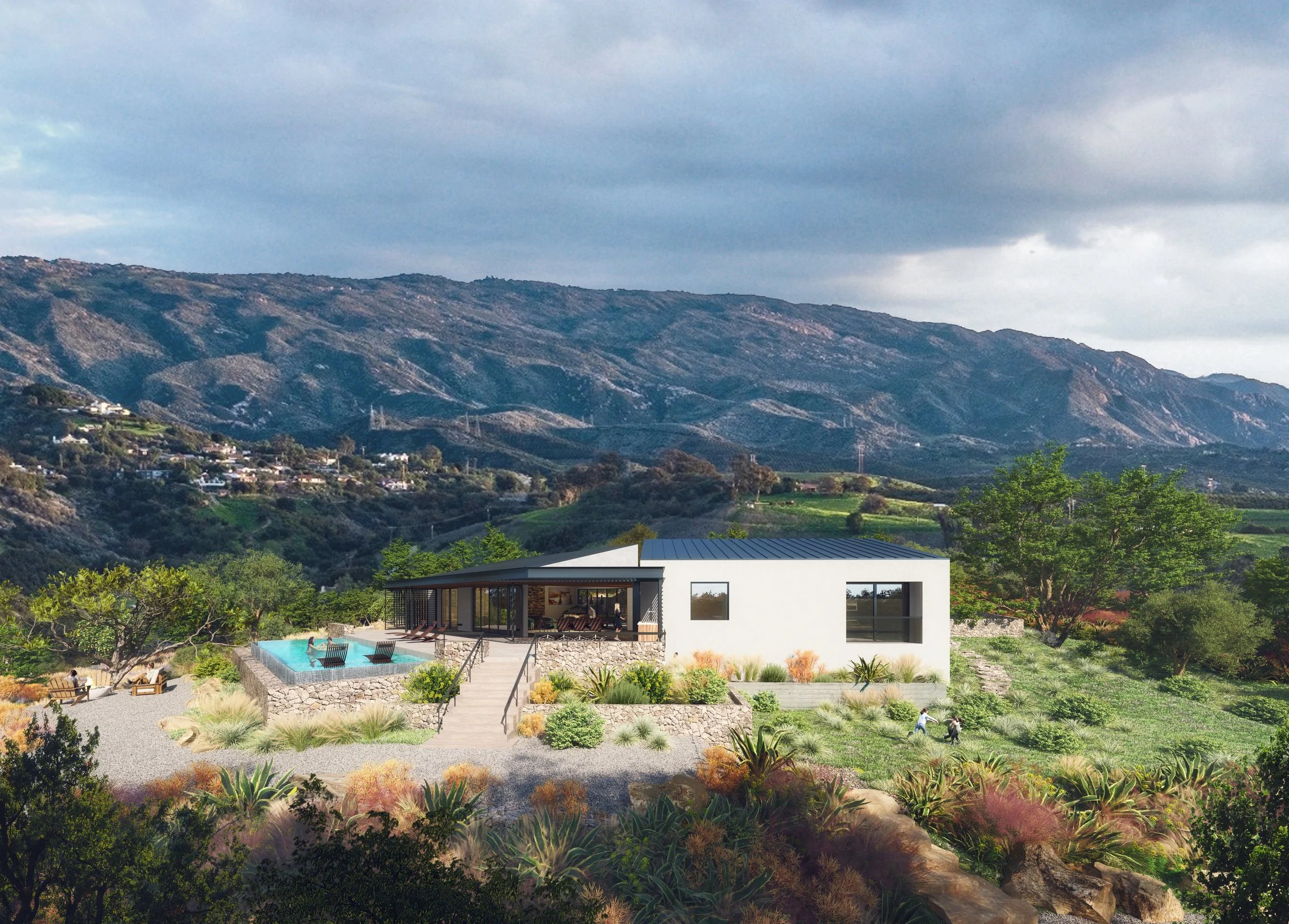
For TGA, Design for Wellbeing is both an ethical position and a technical framework. Our commitment is to design buildings that do not deplete human energy, but return to it. This means treating air, light, sound, temperature, and materials as core determinants of wellbeing, and shaping them so that the built environment reliably supports the people who live and work within it.
Design for Wellbeing defines the standard we design to: buildings that strengthen health, comfort, and clarity while aligning with long-term environmental responsibility.
Sources:
Allen, J.G., MacNaughton, P., Satish, U., Santanam, S., Vallarino, J., & Spengler, J.D. Associations of Cognitive Function Scores with Carbon Dioxide, Ventilation, and Volatile Organic Compound Exposures in Office Workers: A Controlled Exposure Study of Green and Conventional Office Environments. Environmental Health Perspectives, 2016.
Healthy Buildings. Harvard T.H. Chan School of Public Health.
Babür, O.Cognitive Benefits of Healthy Buildings. Harvard Magazine, April 6, 2017.